You are causing ripples, intended or not

image

It was a rough week for our school.  Teachers were negative and impatient.  Students were edgy and misbehaving.  Parents were irritated.  We didn’t teach like we usually do, and we probably didn’t inspire anyone.  And it was my fault.

It was a rough week for me.  I was sick, and I was overwhelmed by personal issues and professional frustrations.  My stress level was high, and there is no doubt that my emotions had an impact on our whole school.  Todd Whitaker says it like this, “when the principal sneezes, the school catches a cold.”

I can remember that week clearly.  Even now, years later, I feel guilty about it.  As leaders we have to accept that our emotions will impact everyone else working in our organization.  We set the tone.  The superintendent sets the tone for the district.  The principal sets the tone for the school.  The teacher sets the tone for the classroom.  It is an awesome responsibility, and one for which I’m not sure I was always adequately prepared.

Susan Scott talks about the need to be aware of our emotional wake.  Like a boat in calm water, you are causing ripples whether intended or not. Every interaction, every conversation, every look leaves an impression on the other person.  It is unavoidable.  There will be times when we have to make unpopular decisions and have difficult conversations.  It will leave a wake.  It is unavoidable.  But we need to be mindful that even informal, casual interactions leave an impression.

It’s not really fair that the culture and climate of our schools are tied so closely to our emotions, but they are.  The more aware of this fact a leader can be, the more successful they will be in addressing it.  Our superintendent calls it “getting back to zero”.  When something happens that impacts your positivity, recognize it, and get back to zero as quickly as possible.  Don’t rehash the negative.  Don’t relive the event. It happened.  Move on.  Your emotions, your attitude, your wake is impacting others.  It is a reality you accepted when you chose to become a leader…in your classroom, in your school, in your district.

Positivity is not always easy.  There are times when real, significant issues occur in our lives.  There are times when we need to seek help and find comfort and wisdom from others.  Seek it.  Find it.  Get better and move on.

When things in the organization aren’t going well, start by looking in the mirror.  Could you be having an unintended impact?  Have you been sneezing?

The October Letter

image

Fall is my favorite season.  Decorating the house for Halloween, curling up with a book in comfy clothes, and burning Yankee Candles bring me joy.  I love October.  But in schools across our district, October is a busy month.

I was walking the hallways of our school late one afternoon, returning to my office from a meeting.  As I passed a classroom, I heard a teacher crying.  Our conversation was long, and she shared all of the stress she was feeling: papers to grade, lesson plans to write, conferences to prepare.  She felt overwhelmed, and she was sure that everybody was feeling like this was the most stressful year they’d ever had.

Someday I will write a whole blog on the dangers of indefinite pronouns (like “everybody”) and superlatives (like “most stressful”), but for now, I’ll concede that after some probing, we agreed that people were feeling swamped.

As our admin team processed how we might support the teacher (and the rest of the staff), we decided to make our weekly grade level meeting about fun.  We crafted a fantastically motivating letter reassuring the staff that things would get better, and we shared positive quotes about the impact they were having on students.  It was good stuff.

We did a “save as”, called it The October Letter, and then discovered that we, in fact, had created an October Letter the year before.  Seriously!  There was a letter on our server with the same title and eerily similar content.  Apparently we had forgotten that our school was feeling the same way exactly a year earlier.

When we reflected on the school year, it made total sense.  We had been working for almost 12 weeks with only one day of vacation.  We had kicked off a new year, gone through an entire grading period, moved past the honeymoon phase and into the reality of our students’ many, many needs.  People were worn out.  And just when they were at their most tired, we asked them to be “on” for two nights of conferences and a day of professional development. It’s no wonder there were some tears.

School years have cycles.  Every school is unique.  In our school, October was the low.  Once we became aware of it, we could plan for it rather than reacting to it.  Effective leaders have emotional intelligence.  They recognize that the social and emotional health of students and staff is as important as effective instruction.

Plan Ahead

Get good at looking ahead and assessing when things may be too much for staff.  Plan systematically to roll things out over time.

Recognize the Signs

Pay attention to the climate in your building.  Ask and listen, so you can address issues as they arise.

Go Quiet

There is a time to push and a time to sit back.  Effective leaders recognize each of those times.

October is a gift.  Enjoy it!  The sunsets are glorious, and the weather is still nice enough to go for walks to enjoy them.

And if your school year cycle means you’re feeling some stress, take notice.  Get yourself back into balance by inserting fun where you can.  Look around, who needs a zip-lock bag of candy corn?  We can each chose to lead from our seat on the bus.

How will the world be different because you were in it?

image

The world will be happier because I was in it.  At least that’s my plan.

Contemplating your own mortality is not something I’d suggest anyone spend much time doing.  But the reality is that life is short, and we would be wise to put some thought into the way we are spending it.

I have a friend who is focusing her energy right now on the crisis with Syrian refugees.  She has identified concrete ways that people can get involved and make a difference.  She is spreading that word, and she is working to improve the situation for people in great need.

I have another friend who has worked for the military and in the public sector.  She has lived in some of the most dangerous places on the planet.  Her work has shaped public policy, and she has risked her life for our safety.

I have a friend who is a Superintendent.  One who spent time working with the recovery efforts in Haiti and New Orleans.  My high school classmates are doctors and lawyers and executives.

I sometimes feel like my impact on the world will be small.  Maybe you have felt the same way.  History is full of examples of people who have sacrificed and served to make our world better.  There are people dedicating their whole lives right now to addressing social injustices.  How will the world be different because I was in it?

I’ve spent more time than I should wondering if I have done enough good, wondering if I have taken enough risks to make a real contribution, wondering if I have made any lasting impression.  I know some of you wonder the same thing.

We have.  Our lives have made a difference.  My life has made a difference.

There is the very real contribution that I’ve made in terms of my children.  They are smart and compassionate and positive.  The world is better because they are in it.

As a teacher, I also feel like I have had the chance to influence others.  There are mature, confident, wonderful adults out there with whom I was able to connect when they were students.  I’m still in touch with many of them today.  The world is better because they are in it.

The world may not know my name, but my life has mattered.

image
http://tinyurl.com/oycr3hl

It feels small to say this, but I hope the world will be happier because I was in it.   If there is a “legacy” that I’d like to leave, it is happiness.

Happiness is not a buzzword.  It is not a fad.  It is not shallow.   Brightening the day for someone can have an impact on every other person they encounter that day.  I want to be the face, the voice, the message that spreads positivity.

I’ve recently become an Optimist.  Part of the Optimist Creed is to “look at the sunny side of everything and make your optimism come true”.  This doesn’t mean that I don’t see the atrocities in the world.  This doesn’t mean that I’ve buried my head in the sand.  It means that in the midst of those things, I choose to believe that staying positive is a stronger way to live.

How will the world be different because you were in it?

Just for Fun…a Few of My Favorite Videos about Happiness

The Science of Happiness- Soul Pancake

The Happy Secret to Better Work- Shawn Achor

Kid President Pep Talk

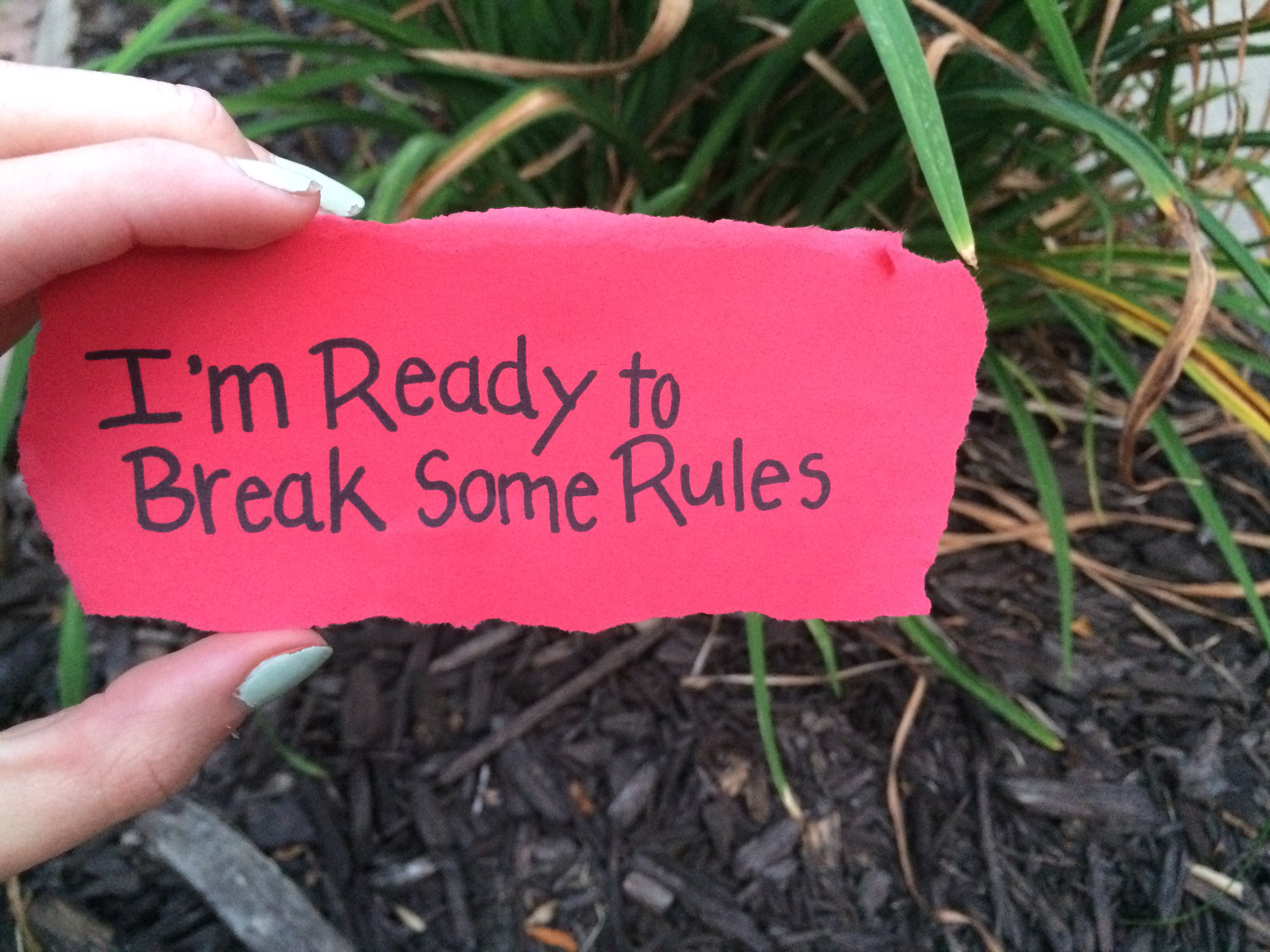
I’m Ready to Break Some Rules

image

I am a rule follower.  I always have been.  I was the kid in class with her hand up.  I was the one on Safety Patrol in elementary school.  I like knowing the rules, and I find comfort in following them.  I was never the “ask forgiveness not permission” person.

As a new principal, I shared my non-negotiables with our staff.  Rule following was on the list. People need to know the core values of their leader.  In education there is safety in having well-defined policies and procedures to follow.  A strong instructional model, a guaranteed viable curriculum, and a quality assessment system guide our work.  A consistent Code of Conduct and procedures for everything from field trips to facility use provide consistency.  Following them ensures equity in opportunities for children.  I know that.  I believe that.

But more and more lately, I’ve been wanting to break the rules.

We take our greatest leaps when we challenge the status quo.  There is power in examining what we are doing…and then changing it when appropriate.

I think I might be ready to rebel.  I think I might be ready to take some risks.

As a profession, we’ve been asking questions about what our most successful teachers, administrators and schools are doing.  How are they meeting the unique needs of their students? In some cases, they are breaking the rules.  In some cases, they are deviating from the standard, prescribed process.  And it’s working.

So if that’s the case, where is the line?  How do we ensure fair and equal opportunities for all students and still create an environment where people can take the risks necessary to meet the needs of each child?

Discuss openly and honestly

I want our leaders to feel safe in talking about what they are doing.  I want to ensure a culture where we can disagree and challenge each other in positive ways.

Listen

I want to get better at listening.  I want to go into these conversations without an agenda and be willing to learn.

Share what’s working

I want educators to be collaborative and not competitive.  I want our profession to be about finding what works for all kids.  I want an educational climate that focuses on sharing, so we all get better.

Trust

I want people to focus less on accountability and more on trust.  I will never stop holding myself and others accountable because our work is too important not too, but I want my default to be trust in others’ good intentions.

Risk

And finally, I want to start taking more risks.  I want to challenge more.  I want to push the boundaries more.  I think it will make me better.

Following the rules has worked out pretty well for me.  I’m not sure I’m ready to cast them all to the wind and run amok.  But with age (and maturity?) comes the recognition that challenging the status quo is a good thing.

I think I might finally be ready to break some rules!

Respecting, Preserving, and Building a Legacy

image

Image Source: University of Nebraska at Lincoln 

It’s here!  The first Husker football game of the season.  My newsfeeds are full of inspirational videos, most produced by the University to promote the season and to renew our enthusiasm (fever? mania?) for Husker football.  They are effective.  I am “fired up and ready” as the cheerleaders say.

But this year is different.  We have a new coach.  Mike Riley will lead the team onto the field today for his first game as a Husker.  I can only imagine how he is feeling right now.  The tunnel walk.  The stadium which becomes the third largest city in the state for seven weekends a year.  And the greatest fans in college football.

…and the pressure.

“Be careful what you wish for” comes to mind when I think about the adventure that he has undertaken.   Stepping in to lead a legacy is no small task.  There is history and context and relationships and expectations that you did not create but are now bound to.  There is pride and embarrassment and the glory of victory and the agony of defeat that you were not part of but are now forever tied to.

You are the keeper of our legacy.

It reminds me of a year ago when Dr. Jim Sutfin stepped into the role of Superintendent at Millard Public Schools.  It reminds me of stepping into the role of Principal at Kiewit Middle School.   Being willing to take responsibility for a legacy is brave…and terrifying.

There is so much to learn.  Listening has to be the priority.  You need to build relationships so others will trust you with what they built.  You need to seek to understand what has happened in the past and why.  Respecting those who came before you and what they did to grow the team or the organization gives you the context to take the next steps.

There are a million details involved with a transition but few are as important as respecting, preserving, and building on the legacy.

Today I’m most excited to watch as Mike Riley works his transition plan.  As crazy as this sounds (especially from a Husker fan), I care less about the final score than the impact on our culture.  Mike Riley has taken on the responsibility of our legacy…who we have been, who we are, and who we will be moving forward.

Good Luck today Coach!  The fans are behind you.  We are grateful that you are willing to take on this challenge and to work side-by-side with the coaches and the players who will take the first step today in your piece of our history!


Keeping Connected to the Classroom

image

I have the best job in the world!  (Everyone in education says they have the best job in the world, and we all really mean it.)  After 13 years in the classroom and 9 years as a building level administrator, I am currently working in our district office.  My job is staff development and instructional improvement.  I get to spend my time talking about effective instructional practices.  It is an amazing gift!

This week I spent two hours with a colleague doing walk through observations in one of our high schools.  We are implementing a new instructional model, and this was my opportunity to walk my talk.  I have spent the last year facilitating staff development for our administrators about this new model.  Now I need to spend time in classrooms watching the model in action.  I need to spend time with the administrators who are actually using the model with teachers.  It was wonderful.

There is an energy in a school.  I miss it.  Engaging lessons in the classroom, excited students in the hallway during passing period, and people building relationships at every turn.  It was fun to be back talking about good teaching with a great administrator.

And then it happened.

We got back to the office and were debriefing our experience when another administrator in the building popped in to let us know there was a discipline issue being addressed across the hall.  And there it was…the real world.

We ask our administrators to do so much.  There are hundreds of tasks that need their constant attention.  Safety and security, technology, parent concerns, student issues…the list could go on and on.  We need them to manage the building, but we also need them to be instructional leaders.  Finding that balance is not easy.

Walk through observations, reflective conversations, and meaningful feedback are all critical to improving instruction.  We know this!  But finding the time to do those things effectively can be a struggle.

Today was a good reminder for me that the real world sometimes gets in the way.  As someone who is not currently serving in a building level role, there are things I need to remember.

Listen and Seek to Understand

I need to listen openly to the experiences of the people who are implementing things in the building.  They have the practical experiences and a more realistic understanding of what is actually happening.  I may think I know, but I am not the one doing it. We need to have a relationship that allows for honest and direct conversations.  Time is precious; there is never enough of it.  When we can carve out time to talk, everyone needs to be willing to share openly.

Empower Others

No amount of planning on my part can replace effective implementation by the leaders in the building.  My role is to empower leaders to be both visionary and systematic.  I can only make things happen by developing capacity in others.

Offer Grace

While instructional improvement is certainly not all I do, it is the big rock in my world.  But what is a big rock for me may be a pebble in the moment of what they are dealing with in the building.  It is critical for me to remember that my piece is only one piece of what they are being asked to do.  If something gets dropped or a detail gets neglected, my first instinct should be to offer grace.  I have no idea what student issue that administrator has been tackling.

Now don’t get me wrong, I’m not letting building administrators off the hook here either.  This same real world exists for our classroom teachers too.

We ask our teachers to do so much.  Administrators have to remember that their perceptions will never be as accurate as the teachers’ actual experiences in the classroom.

And finally, I’m not letting classroom teachers off the hook either.  We ask our student to do so much.

This real world exists for us all.  Listening and actually hearing the experience others are having is a powerful first step.

Just Because I Beat You Doesn’t Mean I Win

image

The weather was perfect this week.  We slept with the windows open, and I could hear the marching band practicing as I ate breakfast.  There is just something about this time of year.  Our cheerleaders are fired up, and our football players are ready. I spent this afternoon at a softball game as our fall sports are kicking off.

I am a football girl…the thrill of a 4th quarter comeback, the hail mary caught in the end zone, the season that starts off slowly and then suddenly catches fire.  In fact my family refuses to let people come over when my team is playing.  To say I get animated is an understatement.

I am competitive.  I want my team to win.  I want to win.

As a middle school teacher, I used friendly competition to motivate my students.  In the fall, I taught the routines and transitions for group work with the Desk Olympics.  I would time classes as they practiced getting into and out of small groups of varying sizes.  Each period competed with the other for “prizes”.  Middle school students will do anything for a piece of candy or a cheap plastic toy.

Competition is engaging.  Competition is motivating.

Competition is also dangerous at times.  There is a balance between a competition that pushes us to grow and a competition that stops us from growing others and our organization.

Athletes know, for example, that training with someone who is just a little better than they are can push them to get faster or stronger. But what happens when that competition becomes toxic?  What happens if those partners stop sharing training tips in the hopes of staying one step ahead?  “The goal in life is not to be better than anyone else.  It’s to be better than you were yesterday.”  (Jon Gordon)

It’s worth repeating that the goal should always be to create a better version of yourself and a better version of your team or organization.  Competition can fuel that drive and push you to be the best version of yourself.  If you do 10, I want to do 12.  It’s how I am wired, and I work with people who are even more competitive than I am.  I think we push each other.

But competition is complex.

Systems that compare can make it harder to create a culture that allows for  growth.  If I want my school to look better than your school, I will be less likely to work collaboratively with you.
In education we are working with and for children.  Competition between students when it comes to learning is not healthy.  Competition between schools when it comes to student achievement is not healthy.  Competition between districts when it comes to funding is not healthy.

A rising tide lifts all boats.  A colleague from another district called me this week to process through some test scores and what his school could do to address the issues.  He just needed to bounce ideas off someone.  I’ve reached out to him (and many others throughout the years) to have this same conversation.  Our collaboration is more effective than a competition could ever be.

I embrace my competitive nature.  I intend to cheer loudly next week at the first football game.  But I also appreciate that I have things to learn from other people and that they may have things to learn from me.

I don’t think competition is a bad thing, but I think we need to recognize that there should be a balance.  We need to reflect on our motives.

When we start to care as much about other people as we do about ourselves, the world will change.

A Letter to My Daughter

image

Educators often think of graduation as the measure of our success.  It’s the moment we’ve been working for since that first day our students arrived at Kindergarten Round-up.

But I think we are wrong.  I think this week is actually that moment.  My social media feeds are full of pictures of teary-eyed parents and nervous young adults unpacking cars, hauling mini-fridges, and sporting new college gear.

I think the measure of our success really starts this week.  As our children head off to college, we get to find out if they are, in fact, “college and career ready”.

When we watch the seniors cross the stage at graduation, we hope that we have prepared them to be successful in whatever their next steps may be.  This week, as we send them off to Basic Trainings and Freshman Orientations, to first days at new jobs or to dorm rooms and apartments, we get to find out if we succeeded.

For you, my daughter, I think we did.

There are so many things I want for my kids.  Sometimes when I say “my kids”, I really mean my students.  But this week, I am talking about you and your sister.

So what do I hope for you?

I hope you are creative and collaborative.

I hope you are willing to take risks.

I hope you persevere when things get hard because there will be times when things get hard.

Mostly though, I hope you enjoy your life.

I want you to celebrate who you are and not devote time to comparing yourself to others.  Comparison is so often a source of frustration and disappointment.  It’s what we do to ourselves that makes us feel like less.  There will always be someone smarter, someone cuter, someone wealthier.  But there will never be another you.  The only person you ever need to compare yourself to is the you from the day before.

Reflect.  Learn.  Grow.

I want you to avoid judging other people.  That’s what we do that makes others feel like less.  There are few things you can be that are more important than being kind.  “We are how we treat each other and nothing more.” (Alternate Routes)

Content matters.  It’s important that you can write well and that you can make meaning of what you read.  You have number sense, and you understand our history.  All of that matters.  But without the rest of it, without the life skills, you would not be able to become who I know you are destined to be.

I am so proud of who you are right now.  I always have been.  I always will be.  I have faith that you are college and career ready. I am grateful for all of the teachers and administrators and family members and friends who helped shape you.  But mostly this week I am just grateful for you.

This is a hard week for all of us who are sending our babies off to college…maybe harder than when we started you on this journey in kindergarten.  But it is also a celebration.  This week we measure our success!

How a Note Can Change the World


I have worked for two different people who started meetings by asking us to write notes of gratitude to colleagues.  Not rocket science, I know.  But culture-shifting and life-changing.

Something happens when you put your focus on recognizing other people.  Something powerful.  First, you impact that person in ways you could not imagine.  Human beings need to be valued.  We need to know we matter and that other people know we matter.   It seems so simple, but taking the time to write a note and letting people know what you appreciate about them can make all the difference in their day.  Over time, this kind of validation can change a life.

Writing notes (or other rituals designed to recognize and appreciate people) can impact your day as well.  It lifts your mood.  It takes the focus off whatever might be happening in your life, and it shines a light on something positive.

And the impact on your organization cannot be overstated.  A work culture that focuses on the strengths of its people is positive.  The people feel valued.  I have seen first-hand how a shift towards building relationships and recognizing the contributions of other people can change a school, a district, or an organization.

People matter.  People need to know they matter.  Tell them.

As we start a new school year, it is worth a reminder that our students also have this primal need to be recognized, to be seen, to matter.  A friend shared a video with me this week that was a vivid reminder of this need to matter.  Welcome your new students.  Learn their names quickly.  Know them.  And then tell them and tell others all of things you appreciate about them.

Our world can feel overwhelming at times.  The news is full of events that make us question humanity.  How could something as simple as a note ever have an impact?  It can.  It does.  “Never doubt that a small group of thoughtful, committed citizens can change the world; indeed, it’s the only thing that ever has.” (Margaret Mead)

The Struggle is the Best Part

Grit and perseverance - picture

This feels good.  Sitting at the computer, looking out at the surprisingly still green grass and the blooming flowers in my backyard.  Typing a new blog for a new year.  This feels good!

Don’t get me wrong, summer has been amazing.  Taking time to rest and sharpen the saw is important.  I have traveled and read and napped.  I have relaxed, and I have reflected.  I feel energized.  In fact, my favorite thing about our profession is the school year cycle.  Each year we get the chance to plan, to implement, to reflect, and to redesign. We get to start anew, and I for one am grateful for that chance.

This past week we welcomed our new teachers, and tomorrow we will welcome back our returning teachers.  I know some of you still have summer left, but we are all closing in on those first days for staff and students.  The excitement is palpable.  What is your hope for those teachers this year?  What is your hope for students?

For me this time of year is about energy.  It is about sharing a vision and generating the energy to make that vision come to life.  We get the unique opportunity to start over each year.  It is a gift not to be taken lightly.  Use this time well.

In our District, we have been focusing on college and career readiness skills.  Are we doing all we can to be sure our students have not just the content but the life skills necessary to be successful in this century?  Our superintendent asked our new teachers to not just teach but to model grit and perseverance for their students.  Easier said than done.

My sister is an amazing mother.  Already so much better at things than I was when I had a 3-year-old.  I am learning from her all the time.  This summer I learned something about creating this grit and perseverance…and about modeling it.

Like I said, her son is three.  And he is curious.  She recently posted the following video on Facebook.  Of course (because he is adorable), she got plenty of comments on how cute and clever he is.  My first thoughts though were different.  I thought, ‘He is going to break those blinds.’  I am sure that if that were my child, and I was the one holding the camera, I’d have told him to stop because he might damage the blinds.  I am sure that I would have gone over, taken the cords from him, and just showed him.  And while he might have learned how to open the blinds (the content), he would not have learned to stick with something until you figure it out (the life skill).  My sister is an excellent teacher.

My hope for this new school year is that our new teachers, and our returning teachers as well, are willing to risk damaging the blinds.  A neat and tidy and quiet classroom might look great from the outside, but it is usually the messier, louder work that results in the greatest learning.

Good luck to you all as you kick off your new school year.  Enjoy the gift of a new start.

The How Matters

image

I’m in the middle of one of the busiest times in my work year.  While others in education are starting to slow down, our department fires up.  We offer professional development for teachers and administrators, and the first couple weeks of summer are one of our biggest times.

All of these classes, sessions, institutes, and meetings have given me the chance to see some of our best leaders in action.  I work with amazing people.  And while the content has been fantastic, it is the interpersonal relations that have given me the most on which to reflect.

I think sometimes we make things more complicated than they really are.  When you have the chance to reach large numbers of people at once and to use that time to build or enhance relationships with those people, take it!  These opportunities to interact informally, in a non-evaluative setting, can change the dynamics when we are doing our work.  This is the chance to get know the people, not just their work.

Be Likable

People respond to leaders who are charming and charismatic.  Make eye contact whenever possible.  Say hello in a way that makes others feel like you know them.  You do not have to remember every name in order to make people feel known.  (Although knowing someone’s name is a powerful way of connecting.)  Give high fives.  Smile.

Listen

People do their best thinking when they believe what they say matters.  We need fully engaged people who seek to understand issues deeply and who are willing to share their best ideas.  Effective leaders listen.  Effective leaders have an ability to make others believe that they have a voice in decisions, big and small.  When people feel like they have influence on the vision and the execution of the work, they are able to do their best.  Listen.  Really listen.  Be willing to be influenced.

Connect

People need to belong.  I have been reminded of this time and time again.  Children need it.  Adults need it.  Effective leaders find ways to connect with people and make them feel like they belong.  They know when there is a big event in someone’s life.  And they find time to show up.

Embrace Positivity

One of my favorite motivational reads is Jon Gordon’s book The Energy Bus.  It is about the importance of finding, maintaining, and generating positivity our lives.  Effective leaders design positive environments where people can thrive.   Our superintendent speaks beautifully about getting back to zero in our work and our lives.  He acknowledges that our work is hard.  But the best among us find ways to do what’s hard and to do what’s necessary while staying positive…or getting back to it as quickly as possible.

I’ve spent time this year reflecting and trying to isolate just exactly what it is that makes a leader effective.  Of course there are countless skills and abilities that go into the equation, but it starts with being personable.  I know people can point to leaders who have been effective while being anything but likable, but I think that’s the harder path.  To motivate and inspire others, start by being amiable.

When my husband read this draft, he said “Haven’t you said all of this before?”  Yes, yes I have.  What I think I’ve reflected on most this year is that WHAT we are doing is incredibly important.  But HOW we are doing it matters as much.

Why I Hope to Someday Be Called an “Educational Troublemaker”

We lost an important voice in education this week.  A mind willing to challenge the status quo, and a man who loved the art of debate.  In fact, just last Monday in a blog post, he was, as he described it on Twitter, engaging in a nice dialogue about teaching students to read.  He disagreed with the ideas in a new book, and he was sharing a counter-argument.  He was engaging in a positive and professional debate which, again as he put it on Twitter, “needs to happen more often”.

In education “celebrity” looks different than it does in Hollywood.  We do not measure success by movie tickets sold or by magazine covers.  Our “celebrities” are those special few who have impacted our work with children by helping us know better how to reach them.  By all measures in the world of education, Grant Wiggins was a success.  And our world will be less because of his loss.

Grant Wiggins pioneered the idea that we should begin with the end in mind.  With Jay McTighe, he published Understanding By Design in the 1990s forever changing the way we all think about lesson design.  No, I take that back, Grant Wiggins would be the last one to say “forever changing” because he would want us to continue exploring alternative methods and challenging the way we are doing it now.

My thoughts about Grant Wiggins, and my reflections this week, are focused on his ability to think differently and his willingness to disagree with the way it has always been done.  Too often we are quick to agree, and too often we are upset when someone disagrees with us.  I would imagine it is not an overstatement to say that the most significant advances in any area of study come from someone being willing to propose that there may be a different reality from that which we currently understand.

Grant Wiggins described himself on his Twitter profile as a “professional educational troublemaker”.  He celebrated that label. So do I.  We need people who challenge our thinking.  We need people who say, “Yes, that is how we do it now, but what if there is a better way.”

I know if I were being honest that there have been plenty of times when I wished others would just agree with me and be done with it.  But that is short-sighted.  Work is made better and ideas are more meaningful when there are multiple view-points.

There is a difference between disagreeing and being disagreeable.  A “nice dialogue” based in fact and supported by research between well-meaning and well-informed people is the ideal way to move our collective understanding forward.  It is spirited, but it is not mean.  Grant Wiggins could challenge your idea and have you thanking him for the discussion.  What a gift!

There is a well-done summary of the recent debate on teaching students to read in a Washington Post piece by Valerie Strauss.  Much will be written in the coming weeks about the impact Grant Wiggins had on our profession, but for me, his lasting legacy is that of “educational troublemaker”.  I can only hope to be remembered in that way!

Don’t Pick Up the Rope

image

“I need you to put your phone away and participate in the lesson.”

“I’m texting my mom.  You can’t make me stop talking to my mom”

“Give me the phone.”

“No, you can’t take my phone.  My mom needs to tell me something.”

“I can take your phone.  Hand it to me right now.”

“No.”

“Yes.”

“My mom said I don’t have to give anyone at school my phone.”

“Your mom’s not here.  Our rules are clear.  Give me the phone.”

One thing I know from experience is that a middle schooler can play this game all day.  In fact, sometimes they want nothing more than to engage in this kind of debate with a teacher.  A colleague of mine has great advice for staff members in this situation.  Don’t pick up the rope.

An exchange like this can quickly become a tug-of-war, a fight for power and control.  But it is impossible to play tug-of-war if you do not pick up the rope.

I am not advocating allowing defiant and insubordinate behavior in your classroom.  I am simply suggesting that engaging in an extended debate with a frustrated student generally just results in a frustrated adult.  The more frustrated we become, the less likely we are to resolve the issue well.

Time is an underestimated tool in the behavior management toolbox.  Walking away and not engaging a student is a short-term way to disengage and allow for the possibility that the student will respond appropriately.  If they do respond appropriately, you can decide later what follow-up is needed.  It may be as simple as a conversation, or it may be a classroom or office consequence.

If the student does not choose to respond after redirection, again, don’t pick up the rope.  Each behavior issue is unique.  Some can be ignored until a later time and then addressed.  Others are more severe and require an immediate response.  In those cases, remove the student from the room, or if necessary, remove the other students from the room.

I am not saying this is easy.  I am not saying I have been able to walk this talk every time I have found myself working with a student.  As a teacher, there were plenty of times I picked up the rope.  As an administrator in charge of discipline, I picked up the rope as well.  And almost every time, I made the situation worse.  Cooler heads really do prevail.  When I was able to ask a student to sit or read or work for a while in a supervised location away from other students, and away from me, we were usually able to come back later and talk more calmly.  Sometimes they needed the time to cool off.  Sometimes I did.

The end of the school year can be tough for classroom management.  Students are getting excited for summer.  So are the adults!  When tensions rise, my advice is to not pick up the rope.

The Beautiful Caterpillar 

What is our fascination with butterflies?  Oh I understand, they are beautiful.  In my family we love monarchs.  My children hunted for milkweeds with their grandma to find the caterpillars that would someday become the monarchs.

But what’s wrong with the caterpillar?

It’s as if the potential for something more beautiful, more appreciated is instinctive.  “What if” sometimes seems more important than “what is”.

I’m guilty of it myself.  I wrote about the butterfly and asked Whose Wings are You Seeing.

But the caterpillar is valuable and beautiful in and of itself.  It does not need to transform to have value.

Helping our students see their potential is important.  We build lessons and design activities to help them imagine success in high school, a college experience, or a future career. All great things to do. But it is equally important to ensure they know they are wonderful right now.

As educators it is our privilege and our awesome responsibility to ensure that every child in our care knows they matter.  Right now, in their current condition, in their current state, they are wonderfully and perfectly made.  Will they grow?  Of course.  When they know better, will they do better?  I hope.

But I am trying to focus on appreciating people, and appreciating myself, for who we are right now.


Sharpen the Saw 

This week’s blog comes to you from The Happiest Place on Earth.  I’m at Disneyland!  And it lives up to the hype.

Our lives are busy.  We usually have too much happening at work, too many errands and activities at home, and too many thoughts running through our heads.  Sleep can allude us.  Worry can distract us.  If we aren’t intentional about recognizing our stress and anxiety, it can consume us.

Rest is important.  Time away to decompress and to clear your head is essential.  This is hardly a new idea.  Stephen Covey called it “sharpening your saw” over 25 years ago in his widely successful book Seven Habits of Highly  Successful People.

Time to disconnect matters.

This is the final, crazy push in our school year.  It’s a busy time.  I’m lucky to be able to take a couple of vacations days and enjoy some playtime with my family.  But you don’t need vacation to sharpen your saw.

Talk a walk outside.

Go fishing.

Hide in the basement for a couple hours with a good book.

Bake something.

The key is to be present in the moment.  Turn off your phone (I struggle with this) and just enjoy the experience.

Now I’m going to take my own advice and get back to Mickey Mouse!

Show Up

I woke up yesterday with a terrible headache…so bad it would be more accurate to say that the headache woke me up several times.  But it was a big day for my daughter.  She had been working with a committee all year to organize the volunteers for a large autism society fundraiser, and the event was yesterday.  It was important to her that we were there.  I took some medication, ate breakfast, rested for a bit, then got up and got ready.

When we left the event, I had a beautiful email waiting from a friend and colleague.  She has recently suffered a loss, and she was thanking some people for being there to offer support.

The morning was a powerful reminder of something I learned long ago and was just discussing with a friend.  At times the most important thing we do is show up.

Gallup research explains that engagement improves when someone at work “seems to care about me as a person”.  Our lives are important.  Our celebrations, our losses, and our big moments matter.  When the people with whom we work ask about our children and grandchildren, wish us good luck on the graduation party we are hosting, or offer a hug after a hard loss, we connect.  It increases that sense of belonging.

Attending the visitation or funeral of a loved one is a concrete example of showing up.

Attending someone’s retirement reception is another.

Pay attention to what people share.  The big events are not usually a secret.  Ask people what they are doing over the weekend. And really listen.  When someone extends an invitation, go.

I have a good friend at work who has made these events a priority.  She speaks beautifully of the impact others made on her when she lost her father.  Not only does she show up, she reaches out and invites me along.  I have learned so much from what she has modeled.

Now, I would never suggest that you attend events when you are sick, and I am not promoting the guilt that comes with having to miss one of these events because your schedule does not permit it.  Real life requires balance.  There are things we miss because one person can only be one place at a time.  There are things we miss because sometimes no matter how hard you try, you cannot fit one more thing into your day.  And of course there are things we miss because the healthier option (either physically or mentally) is to rest.

I am simply suggesting that there times when what people need most is for us to just show up!

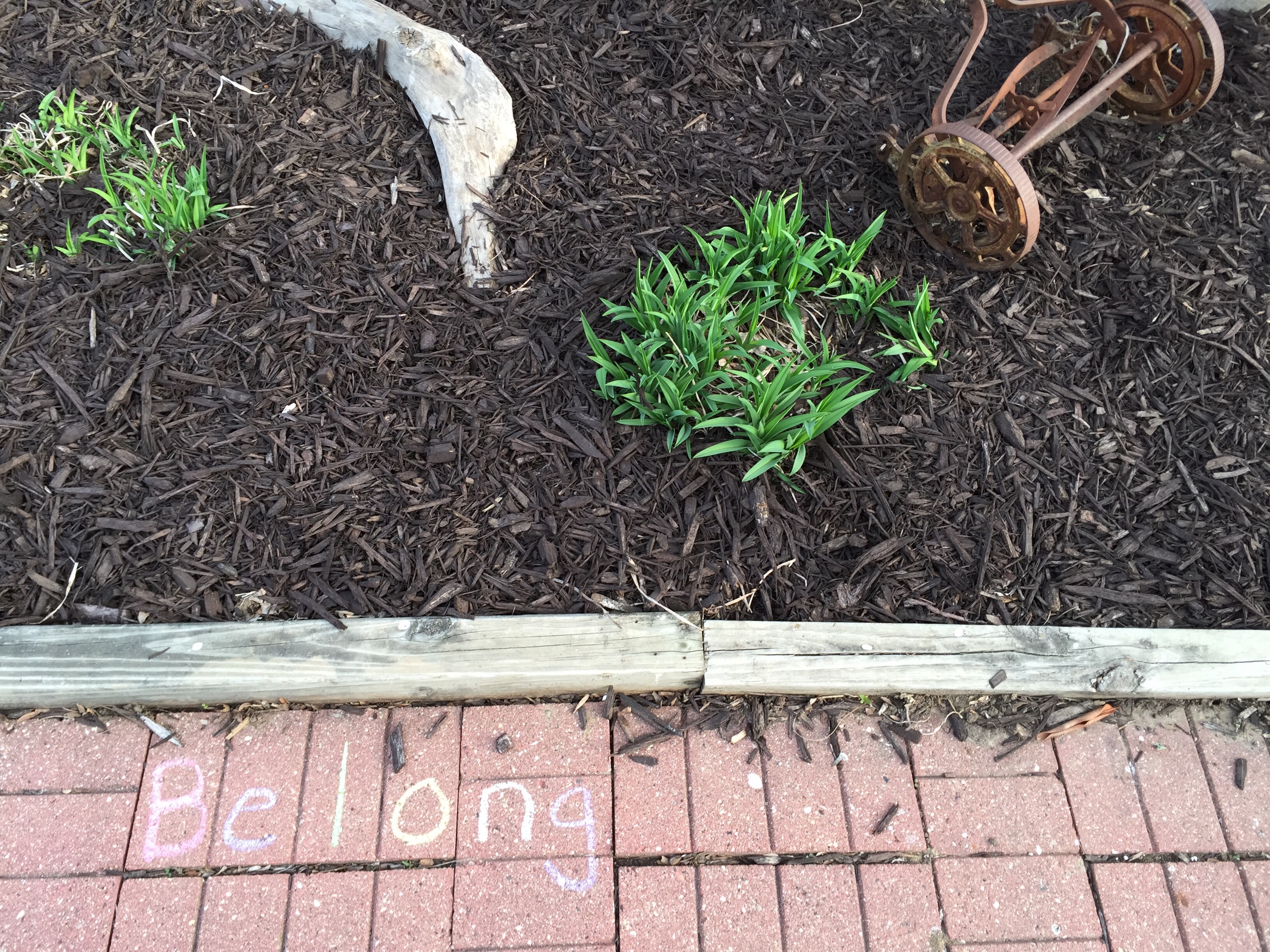
Belonging 

image

Being alone can be meditative and refreshing.  A solitary walk outside in this newly warm weather can clear your head and help put a tough day in perspective.  Being alone is not the same thing as being lonely.  Being lonely is an awful feeling.

On this week’s episode of The Big Bang Theory (“The Fortification Implementation”), Sheldon asks Amy, “Do you think there comes a point in life when it stops feeling bad to be left out of things?”  Her answer?  “Probably not.  It’s an evolutionary advantage to be included in group activities.”  She’s right!  The need to belong is primal.

People need to belong.  People need to have a sense of connection…deep connection…in order to be fulfilled.

Gallup defines this need as having a “best friend at work”.  Ideally, people will find colleagues that share their personal interests, passions, and attitudes.  I was lucky enough to have a strong social network as a teacher and an administrator.  I worked with people who were also friends.  For whatever reason though, that does not always happen for everyone.

How can teams create a climate that fosters a sense of belonging?

Learn Together

Getting better at our work is a powerful way to bond as a team.  Teaching can be a lonely profession.  Having opportunities to investigate and to try out new strategies or to watch each other teach can build a team.

Play Together

It’s important to have fun at work.  Build in time throughout the day to play.  Use a grade level, team, or department meeting to facilitate activities that allow people to get to know each other on a personal level.  Ask someone to join you for lunch.  The staff lounge is a lonely place when you don’t have a group of people to join.   Strike up a game of hallway mini golf before school one day.  Pull together a 3 person team and challenge some students to a  game of Hoop-It-Up.

Celebrate Together

Make a big deal out of the moments of success in people’s lives.  When someone gets engaged, has a baby, hosts a graduation party for a child, celebrate!  Our lives outside of work are important.

Recover Together

When you work with people for long enough, difficult times are sure to happen.   They may get sick, lose a parent, have a child suffer an illness.  In times of grief or sadness, being there for the people on your team matters.  Show up!

A friend reminded me that a sense of belonging is deeper than simply having social events and doing fun things together as a staff.  That matters!  But there is a deeper and more meaningful connection that people seek.  People want to help set the vision of the work…especially when the work is as important as it is in education.  People want to belong to the decision-making body.  They need to feel connected to the bigger purpose of the work.  As a leader, how are you seeking every voice when making decisions and setting the vision?

We do our best when we belong to a positive team.  It is a primal need that not only feeds our collective souls, but truly does bring out the best in our performance.  This week, do one thing to help someone else belong.

Whose wings are you seeing?

image

“What of my future self is in me right now?”  (Radiolab- Season 12- Episode 4- Black Box)

Did you know that if you peeled back the skin of a caterpillar, you’d see all of the elements of a butterfly already formed and waiting to emerge?   A colleague of mine attended a staff development session recently in which an important question was posed:  “Who saw your wings before you did?”

As you might imagine, this question generated considerable conversation.  Mentors take many forms, but we can almost all identify key people who came into our lives and saw something in us that we had not yet seen in ourselves.

I would never have imagined the professional journey I have taken without the encouragement of family, friends and colleagues who believed in me.  My parents raised me to believe that there was nothing I should not try…that I had within me the capacity to achieve great things.   My husband supported me through degree after degree, always reassuring me when I was in doubt.

Leadership within and beyond the classroom would not have been possible without the wisdom of the mentors who led by example and reached out to give me opportunities to grow.  One in particular changed the trajectory of my life. There are no words to thank him adequately.  He saw my wings before I could have imagined I had them.  All of this has been fun, but I’ve had to reflect on what I have done to be that same mentor for others.  Whose wings have I seen?  What have I been doing to reach out to others and to help them see their gifts, their strengths, their possibilities?

Look

Look carefully at the people in your life.  Identify someone who might need encouragement to take on a new challenge. Reach out.  Sometimes all it takes is for someone to let you know they believe in you.  Our schools are filled with talented, passionate people who may need inspiration to take on leadership roles.

Listen

Listen to the people with whom you spend time.  It can be easy to work or even to live with people without really listening to their ideas, their thoughts, their dreams.  Sometimes all it takes is for someone to listen to inspire you to take action.  Effective leaders are approachable.  No matter how brief the interaction, be present, really listen.

Learn

Learn what the people in your life do well.  Spend time exploring the strengths of your team.  No one set of skills leads to success, and it frequently takes a mentor to help you see how your unique combination of strengths can be leveraged to make you the most effective.

There is a powerful, affirming feeling that comes from being mentored.  Few experience success without a series of people who made it possible.  A grounded leader though is focused not on themselves but on the people they can nurture.

So whose wings are you seeing?

Serve

SERVE

Image Source: Serve by elycefeliz CCBY

Today I had someone share with me that last week was “tough in the trenches”. 

In the trenches?

I understood the expression.  I knew what he meant, but once again it felt like us versus them.  “Us” are in the trenches.  “Them” are safe somewhere else doing things to us.

I am troubled by the analogy.  Trench warfare is about digging in and holding your ground.  Leadership is about getting out of the trench, facing the challenge, and moving forward.  Let’s get out of the metaphorical trench.

As a classroom teacher, I know that I felt like I was on the frontline or whatever other military reference I might have constructed to explain that I was the one in the room with the students.  And I was right.   But as an assistant principal, I was also on the frontline with students and with parents and with teachers in any number of very difficult situations.  Then as a principal, I was the public face for every news story, radio show, and Facebook post when someone disagreed with a decision.  And I was the private voice for every difficult final decision at the building level.

I’ve had an opportunity to reflect this week on what it means to be a servant leader.  What does it mean to serve?

I’m going to suggest something that might be unpopular.  I’m going to suggest that servant leadership is about putting needs of the organization above yourself.  This is not easy because it can sometimes mean making a change or taking on a challenge not of your own choosing.  

This is the time of year when principals are having conversations about teachers moving grade levels or changing teams or courses.  There is something so comforting about starting a new year in a familiar classroom with familiar teammates and a familiar curriculum.  Making a significant change is hard.  But every year in almost every school at least some people are asked to try something new.  While there are some people who love change, most people find it uncomfortable.

It’s hard, but change can be rejuvenating.  Developing new skills, cultivating new relationships, and establishing new routines can breathe new life into your work.  And sometimes, it’s what’s best for the organization.

I’ve learned the power of servant leadership from my colleagues over the years.  As a classroom teacher, I was always inspired by the people who tried new grade levels or new subjects when asked.  I’ve learned from administrators who’ve changed buildings or positions.  And I’ve learned from those who led the sometimes very difficult conversations about organizational change.

Servant leadership is about putting the needs of others and of the organization in front of your own needs.

“When people ask me what they should do to lead, I say lead where you are.  Influence the people around you.  Start there.  Love.  Serve.  Care.”  Jon Gordon


Don’t Take Yourself Too Seriously

image

I stumbled this week.  I was presenting a report to our Board of Education.  It was an important project over two years in the making, and when the moment came, I flubbed it.  Now it could have been much worse, but I certainly provided the comic relief in a pretty serious meeting.

I had prepared for that moment for months.  I had written my comments weeks earlier.  I ran through what I was going to say over and over.  I didn’t sleep much the night before, but I thought I was ready for anything.

And then, when the moment came, I tripped up.  I got too excited and jumped right over protocols (and the Board of Education) and into my speech.  Everyone laughed.

I had a decision to make at that point, and thankfully the other people in the room showed me the right thing to do.

“That was awesome.”

“You rock.”

When I was done, my text messages were supportive and fun.  The lesson from my colleagues was clear.  “Don’t take yourself too seriously.”

Leaders are so often in serious situations.  Real, difficult, serious situations.  The opportunity to lighten the mood is not always evident. It would often times not be appropriate.  But when  the moment does present itself- run with it!  Life is short and too often hard.  If there is an opportunity to see the funny side, take it.  Take it especially if it means poking fun at yourself.  Moments like that can teach you humility.  People need to know…you need to know…that you are human, that you err, and that you recognize your mistakes and can give yourself grace.

I think it is important to note here that laughing at other people is never okay.  In my case, the room was filled with friends.  Everyone was clearly laughing with me and not at me.  Humor is essential to effective leadership.  Humor at your own expense can ease tensions and build relationships.  But humor at someone else’s expense will almost always damage relationships.

I wish that I had been nothing but poised and professional in my meeting.  I wish that it had gone the way I played it out in my head all those times. But it didn’t, so the options were clear: stress and worry about it, beat myself up about it, or laugh and move on.  Humor isn’t always the appropriate response, but whenever it is possible, don’t take yourself too seriously.

Be Awesome Anyway

image

School years have natural ebbs and flows, and the two weeks before Spring Break can sometimes be difficult days.  Anyone who works with children knows the phenomenon of the week before the week before a break.  (Yes, you read that correctly.)  Right before a break, everyone exhales and sees the light at the end of the tunnel.  But that week before, the anticipation and stress peak.  It can be a rough time in schools.  My advice…be awesome anyway!

“If there are two paths, I want to be on the one that leads to awesome.”  Almost 35 million people have watched Kid President’s Pep Talk video on YouTube.  Why?  What message inspires that kind of following, and what can we as educational leaders learn from it?

Leadership is complex, but there is one characteristic that seems to inspire people universally.  Positivity!  People want to be motivated by their leader.  They want to feel like they can be better, achieve more, succeed.  Energy is contagious, and you can choose to spread negativity, or you can choose to spread positivity.

Effective leaders have insight, emotional intelligence, and gravitas.  When they are interacting with others, they show exceptional interpersonal skills.  In times of crisis, they display almost relentless positivity.

Leadership is difficult.  In schools it is about leading instructional change, making difficult and divisive budget decisions, disciplining students.  Many situations have two opposing sides. The pace is frenetic, and the stress is palpable.  Yes, leadership is difficult.

But when the moment is challenging, when people are angry, when the circumstances are frightening, people need a leader who is none of those things.  Leadership is difficult, but the best leaders have a way of maintaining their positivity.  A colleague who works with new administrators in our district describes his style as that of a duck.  Below the water, he is paddling fast and furious, but above the water, where people can see, he is positive, calm, and smooth.

Our Superintendent describes it as “getting back to zero”.  Regardless of the stress of the moment, effective leaders get themselves back to a positive place quickly.

Never would I assert that successful leadership could be broken down simply into any one thing.  We are all different as leaders, and our differences should be celebrated.  But if we could all start by being positive, I believe we could create a culture that allows for growth.

Regardless of the current circumstances, take Kid President’s advice. Be awesome!

The Great Behavior Divide

image

Third hour was long.  The students were particularly rowdy.  ‘Must be a full moon.’  Only half of the students handed in homework, and several forgot their books.  But the tide turned when the lesson got going.  It was engaging and relevant, and the students responded.  Things were going well when Bobby threw his pencil across the room and hit another student.  This was absolutely the last straw.  He had been pulling things like this for days.  Done.  I sent him to the office.  In my thirteen years of teaching, I can count on one hand the number of students I sent to the office.  You can bet I wanted him punished.

Cut to three years later.  Another Bobby was sent to the office.  I honestly can’t remember what he did.  But this time I was the assistant principal in charge of discipline, and I was smack in the middle of the great behavior divide.

Anyone teaching or working in school administration will know the divide to which I refer.  A student makes a bad choice.  The teacher sends her to the office.  The teacher, understandably so, feels frustrated and wants punishment.  The administrator, understandably so, wants to teach and build or maintain a relationship with the student.

So the administrator has the student sit quietly for a bit, maybe reflect on or process what happened in the classroom.  Then there is a conversation.  “What happened?”  “Why?”  Ideally several things happen:

1.  Any unmet needs are resolved.  Is the student hungry?  Tired?  Worried about something happening at home?

2.  Any medical or chemical issues are addressed.  Is the student sick?  Under the influence?  Off prescribed medications?

3.  Does the student have an honest understanding of what happened? Is there more to the story from his perspective?  Do you need to talk to other students?

After an investigation, the administrator assigns a consequence in line with the Code of Conduct.  The hope is that the consequence teaches behavior.  The hope is that the investigation and the conversation about the consequence work to establish a trusting relationship with the student…and the student’s parents.  The hope is that with each interaction, the administrator builds rapport and influence with the student.  When that happens, there is a much greater likelihood that in the future the student might make different choices.

Unfortunately this whole process can sometimes frustrate the teacher who sent the student to the office.  Believe me, I understand.  Like I said, when I sent Bobby to the office, I wanted him punished.  I didn’t want him to have a relationship-building conversation.  I didn’t want him getting a pop-tart because he was hungry.  I wanted him punished.

Discipline in schools should not be about punishment.  As difficult it can be in the moment, discipline in schools should be about teaching.

As school leaders, some of the most important professional development we need to provide is to talk about behavior and discipline.  I do think it is possible to avoid the great behavior divide.  It takes time and transparent conversations.  It takes an understanding of the shared vision for the school and the community.   It is important for teachers and administrators to be on the same page.

Like I’ve said before, we’re all in this together.


What’s Wrong with an Ordinary Life?

“We were made for so much more than ordinary lives.  It’s time for us to more than just survive. We were made to thrive.”  Casting Crowns

I truly believe that I am thriving.  I think I am lucky enough to be living my greatest possible life.  But if I were honest, I’d have to admit that there are times I wonder if I am doing all that I am capable of doing or contributing all that I could.

I’ve been thinking about something a friend said to me this week.  “When is it enough?”  When have we earned enough?  Acquired enough?  Achieved enough?  At what point do we settle into our lives and stop wishing for more?

Since I was a child, people have  been telling me that I am extraordinary.  Now, lest you believe that I am in some way unique in this, rest assured that parents and teachers all over the world have been saying the same thing to children for centuries.  I’ve said it to my own children…both biological and those I’ve taught.  And I meant it.

What does it mean though to be extraordinary?  And what’s wrong with being ordinary?  I think our society has become captivated by the idea that some people are leading lives that are by some measure more.  Celebrity, power, wealth are often times the mark of this extraordinary life.  As if people who make an average salary and spend their lives raising a family and/or working in a job that lacks visibility are somehow less extraordinary.

In his book, How Will You Measure Your Life?, Clay Christensen talks about  the limitations of our human mind that lead us to create a hierarchical system for measuring the lives of people.  As if we could somehow create a system to rank people as more or less successful in living a good life.  As a professor at the Harvard Business School and TED Talk presenter (talk about extraordinary), he compares this to what businesses do.  Too often businesses and people pursue “the most immediate and tangible evidence of achievement”.  If I just get that promotion or if I were just on that committee, my life would be worthwhile.

There is no single achievement that will move our lives from ordinary to extraordinary.  A bit cliché, I know, but I looked up ordinary in the dictionary.  It is defined as “with no special or distinctive features”.  Well, we are each by design unique and therefore extraordinary.   “When is it enough?”  Now.  It was always enough.  I am extraordinary.  So are you.   Let’s start spending our time and energy enjoying this ordinary life.

Never Underestimate the Power of Apologizing


image

I feel so lucky to be learning and working in education today.  There has been what can only be called a shift in…philosophy?  attitude? We are becoming relational.  We’ve been talking about relationships for awhile now. We recognize that the relationship between teacher and student impacts achievement.  We know that colleagues are more engaged when they have a best friend at work.   We are starting to genuinely value the power of relationships in our professional success.

In the past, there seemed to be an underlying message that power was the key to success.  The person most able to control others, appear dominant, and exert authority was also the one most likely to be promoted.   I don’t think that is our reality anymore…at least not in education.  More and more the person with the best people skills is the one who is promoted. Emotional intelligence is no longer a nice-to-have; it is the most important thing to have.

People underestimate the need for human connections- especially in moments of great tension, stress, or anger.

As a building administrator, I was always amazed at the power of an apology. So often when someone was angry (a student, a parent, a staff member), the first thing I would say was, “I’m sorry that happened.”  It was not an admission of guilt on anyone’s part.  It did not acknowledge that the person was sharing an entirely accurate account of the events.  It was simply a statement that I was, in fact, sorry for the situation that was causing them pain.  And I was sorry.

In almost every case, that, at least in some part, would defuse the situation. People need to know that others are listening. It calmed the situation and made it possible to explore the issue with less emotional charge.  This was not only true when I was mediating a situation in which I was not directly involved.  It was true when I was the one who had done something, not done something, or said something that made someone upset. I made (and continue to make) plenty of mistakes as a leader.  When that happens, I always try to start with, “I’m sorry.”

I do not feel like I am less effective, less in control, less in charge when I apologize.  In fact, I feel like I am being a better leader and a better model.

Just a Teacher

image

I started my journey in educational leadership ten years ago when I accepted my first administrative position as a middle school assistant principal.  I think there was a time when I believed that my journey really did start there- when I thought that my role as a leader began with that title. It did not.

Twice this week I was lucky enough to spend some time with former students.  It was a vivid reminder of something I have known inside for a long time.  Some of the most important leadership happening in our schools today is happening in the classroom.  It is happening with teachers and paraprofessionals who connect with children every day.

I am fascinated by climate and culture in schools and districts.  I think that a positive climate can foster a positive culture that can result in remarkable growth in the people working and learning in schools.  As “leaders” we spend time and energy measuring our climate and making plans to improve it.  I do think that the “leaders” have the greatest impact on climate. Principals and district leaders make decisions everyday that influence the overall feeling of the building.  Culture though is much deeper.  Culture is long-term.  It is the underlying beliefs that lead to action in a school.  Culture is what controls what happens in a classroom when the doors close and the real interactions take place.

Everyday in classrooms across the world teachers are leading culture in big and small ways.  When a student walks into the room looking upset, a teacher will ask them “what’s wrong?”.  Everyday teachers greet students by name and ask about their world.  Every conversation like this builds a positive culture. These interactions have an enduring impact on students. I was reminded of that this week. There is no greater feeling than knowing you had a small part in creating something positive for kids!

Too many times I have heard someone in a school say, “I’m just a teacher.”  I bet I said it myself at some point in my teaching career.  Just a teacher?  Teachers are the single most important leaders in our schools.  The climate and culture rises and falls on what happens between a teacher and a student.

There Ought to be a Congressional Medal of Honor for That

Over and over I hear leaders speak of the importance of servant leadership.  But what does that really mean?  And do we truly value the leadership of those not in the spotlight?

There’s a story about this in the Aaron Sorkin show Sports Night.  “You guys know who Philo Farnsworth was? He invented television. I don’t mean he invented television like Uncle Milty. I mean he invented THE television in a little house in Provo, Utah, at a time when the idea of transmitting moving pictures through the air would be like me saying I figured out a way to beam us aboard the starship Enterprise. He was a visionary. He died broke and without fanfare. The guy I really like though was his brother-in-law, Cliff Gardner. He said, ‘Philo, I know everyone thinks you’re crazy, but I want to be a part of this. I don’t have your head for science, so I’m not going to be able to help much with the design and mechanics of the invention, but it sounds like you’re going to need glass tubes.’ You see, Philo was inventing the cathode receptor, and even though Cliff didn’t know what that meant or how it worked, he’d seen Philo’s drawing, and he knew that he was gonna need glass tubes. And since television hadn’t been invented yet, it’s not like you could get them at the local TV repair shop. ‘I want to be a part of this,’ Cliff said. ‘I don’t have your head for science. How would it be if I were to teach myself to be a glass blower? And I could set up a little shop in the backyard. And I could make all the tubes you’ll need for testing.’ There ought to be Congressional Medals for people like that.”

When I became an assistant principal, my principal told me that “if someone else can do it, someone else should do it.”  He recognized that my time was better spent on the tasks that no one else could do.  He insisted, in fact, that I work collaboratively to craft the vision of my projects, oversee the design of the process, and then let others carry out what I was not explicitly required to do myself.  He helped me see that time is finite and that I should be spending my time on the things that no one else could do.  He did the same.

In Multipliers Liz Wiseman describes the Challenger.  The leader who lays out a just-beyond-reach challenge for others and then provides the motivation, but not the specific details, to execute.  Others become better than they knew they could be by reaching the challenge themselves.

Many times that meant that I was doing the legwork on projects that our principal had envisioned.  It also meant that others in our building were doing the legwork on mine.  To me, that is servant leadership.  It is doing your work in service to others. Often times our teachers were leading in service to my ideas.  I was leading in service to our principal’s ideas.  And he was leading in service to the mission of the District.

At the District level now, I see this so clearly.  There are an incredible number of secretaries, teachers, para-professionals, technology specialists, building leaders, and district leaders implementing our Strategic Plan.  They do the work to build a better and more effective way of teaching and learning.  They do the work to ensure the necessary supports are in place to help all students achieve.  They do the work to make life better for children.  They are in service to others through their leadership.

Leadership like this is not always recognized.  It is not flashy.   But it is necessary, and it should be celebrated.

Like Philo Farnsworth, the best leaders are skilled at both the vision and the implementation of innovative ideas, but the best leaders also understand that their time may be better spent on the big picture than on the details.

We’re All in this Together

Business People Team with 3D Puzzle Pieces

I recently read a book on shifting school culture, and in it, the author suggested that a sure-fire way to build a culture was to introduce a common enemy.  Now, I love books on leadership. I find great satisfaction in reflecting on and exploring the nature of effective leadership…especially in schools.  And this is not the first time I have read or heard someone suggest that a common enemy is friend to a leader trying to build a community and create a positive culture.  I am here to tell you that they could not be more wrong.

When I was a middle school teacher, our principal retired and a new leader joined us.  It was the perfect time for me because I had assumed some new leadership roles within the school and District, and he almost immediately became a mentor to me.  Among the many things I learned that first year was that an enemy of any kind was not something to be exploited for the “culture cause”.

So many times in a school, the common enemy becomes the District.  In fact, I suggested on many occasions that our building was well-served by the us-verses-them culture we had fostered between our building and the District.  I made the same seemingly-compelling argument that the author I just read did.  We needed to unite against this common enemy.  At first our principal just listened, but he told me I was wrong.  I fought back with what seemed like compelling reasons.  I was convinced I was right.  He disagreed, but he let me continue to weigh the arguments for myself.

“We bond over our distaste for what ‘they’ are doing to ‘us’.”  Who is ‘they’, he’d ask.

“Seeing ‘them’ as an enemy helps protect us from disappointment when we do not achieve at the expected levels ‘they’ set for us.”  Shouldn’t we be disappointed if our students are not achieving to their fullest potential, he’d ask.

“It’s fun to have someone or something to rally/complain/fight against.  And fun builds positivity.”  How could negativity ever build positivity, he’d ask.

Finally one day he simply said, “We’re all in this together Heather.”

When a student is disengaged or struggling with behavior issues or not reaching his/her full potential, we all lose.  A leader understands that.  A leader understands that it takes the positive actions of everyone involved in that child’s life and education to make a change.  Changing the life of a child in a positive way should always be the culture we strive for in our schools.  And that culture will lead to a positive climate for adults.

“They” were just as interested in the success of our students as we were.  “They” were doing the best they could to set meaningful goals for all students and to provide the necessary support for us to achieve.

As someone who is now a “they”, I have never been more aware of the dangers of an us-verses-them culture.  It is damaging…and it is dangerous.  A single school should never build its own culture at the expense of the culture of the District.  We are all in this together.

Welcome to My Grand Experiment

imageI am a teacher, and I am a learner.  For 22 years I have worked in education, and my strongest belief is that people (both students and the adults who teach them) are responsible for their own development- personally and professionally.  Having said that, I also disagree completely with the saying that “you can lead a horse to water, but you can’t make him drink.”  Teaching is not about making anyone do anything; it is about facilitating a long and engaging journey to the water and then enticing the learner with the best water they can imagine.  Students want to learn.  Everyone does.  It is an innate instinct.   We never lose it.  That’s why I am also what can only be described as a staff development fanatic.  I believe that great PD (or professional development for those of you not living in our acronym world) can fundamentally change who you are and how you work.

Learning is a reflective practice.  This blog is my attempt to model my own reflective practices.  As a former English teacher (which anyone who has ever been an English teacher knows is never true-  you never stop being an English teacher),  I know the power of writing.  Writing is one powerful way I learn.  If my reflections can be of use to others, I want to share them.

My name is Heather Phipps.  I taught middle school English and reading for 13 years, and I have spent the last decade as a middle and high school building administrator.  I am currently a District administrator.  Welcome to my Educator Insights!